
The Complete Guide to Coach in 2026
Coach is a leading name in American fashion, and in 2026 its business is growing at a strong pace. The label was created as a small leather workshop, grew into a handbag specialist and today sells clothing, footwear and accessories in stores around the world. Its founding idea has stayed the same for decades: quality leather goods priced below the traditional European luxury houses. That space has been characterized by a federal court as accessible luxury, a market that is distinct from mass-market fashion and from true luxury.
This guide sets out the origins of Coach, who owns it and who runs it, how big the business has become and what it offers. It also explains the difference between a full-price coach store and a coach outlet, a subject that frequently causes confusion. The prices given are observed market prices and not official list prices, and figures are dated to their sources.
Humble Beginnings: A Manhattan Workshop Turned American Label
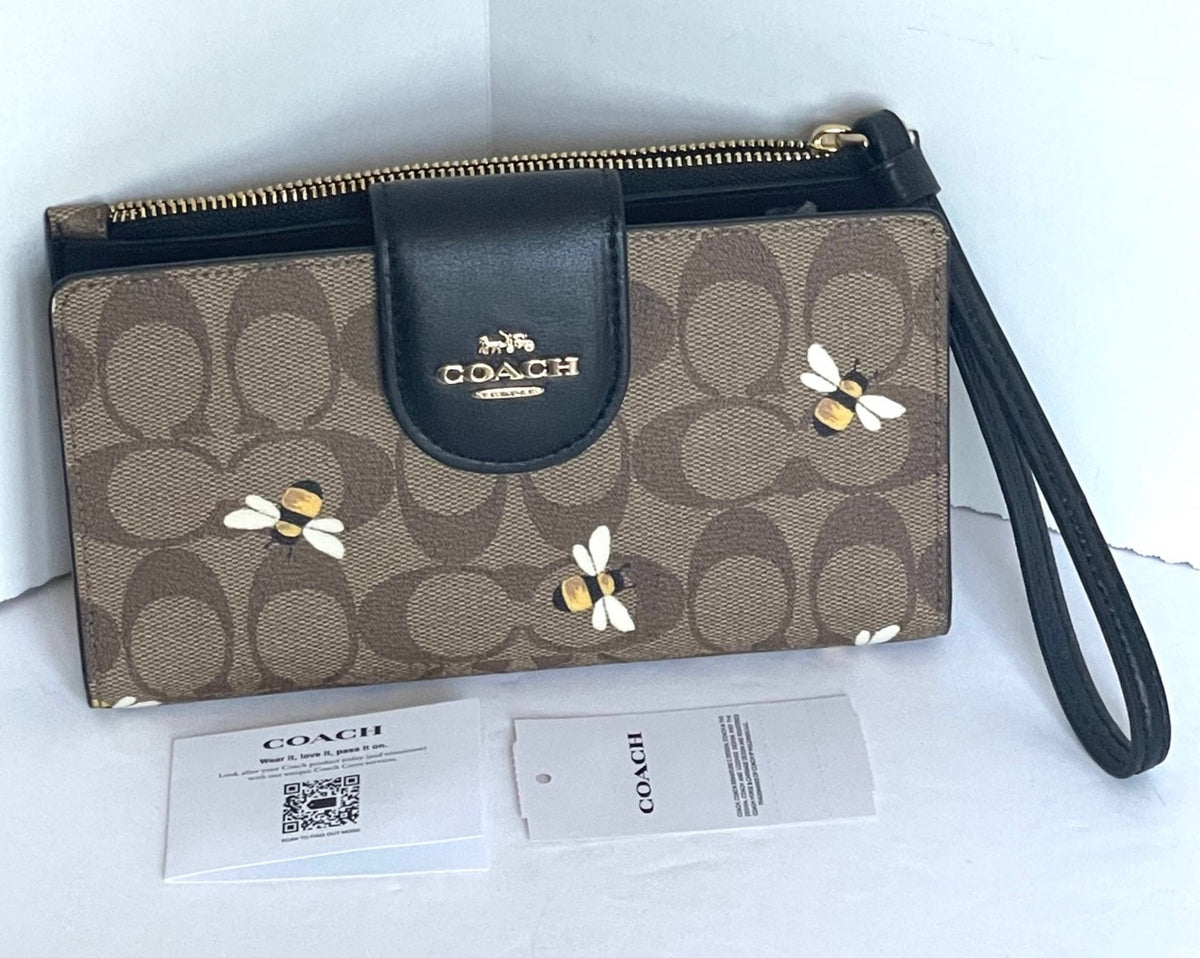
In 1941, a modest family-run leather workshop was established in Manhattan, and Coach traces its origins to that workshop. As Coach itself tells it, six leatherworkers labored in a loft on 34th Street, crafting wallets, billfolds and other small leather goods for men. The handbags and the Coach name arrived later, and the name dates to about 1960 or 1961. It was not Miles and Lillian Cahn who were the first owners of the workshop, though the couple is sometimes wrongly called its founders.
By around 1950, Miles was managing the factory, having luxury handbags joined the business with Lillian in 1946. The couple purchased the company from the original owners in 1961, gaining control in the process. The proposal to begin adding women’s handbags is reported to have come from Lillian Cahn, and that move redefined the company. The leather finish called glovetanned leather, based on the way a worn baseball glove softens with use, has been credited to Miles Cahn.
The Bonnie Cashin Years
The designer most closely linked with early Coach is Bonnie Cashin, who became its first lead designer. She is reported to have worked under contract rather than as an employee, and she was not a co-founder. The year she started is slightly unclear, since Coach’s own pages cite both 1961 and 1962. What is not in doubt is that she designed for Coach until 1974.
In Coach’s account, the toggle on the top of her convertible inspired the brass turnlock closure she introduced in 1964. Side pockets, coin-purse details and brighter colors also count among her credited contributions, and together they relaxed the brand’s look. The turnlock is to this day one of the best-known Coach details, and it appears on bags such as the Cassie crossbody.
Owners, Listings and the Birth of Tapestry
Sara Lee Corporation took over Coach in July 1985. In October 2000 the company became publicly traded, and the following year Sara Lee reportedly exited fully. In 2001 Coach debuted its Signature collection with the “C” monogram, so the pattern is not a mid-century heritage motif but a relatively new addition. On 31 October 2017, Coach, Inc. was renamed Tapestry, Inc., and its stock symbol changed from COH to TPR.
Only the parent company adopted a new name, while the Coach brand, its stores and its products were not renamed. Tapestry sold Stuart Weitzman to Caleres in a deal that closed on 4 August 2025, wrapping up an era that started when Coach, Inc. bought the shoe label in 2015. By 2026, Tapestry’s portfolio holds only two brands, Coach and Kate Spade, and Coach is by far the bigger of the two.
The Reasons the Capri Deal Fell Apart
Capri Holdings, which owns Michael Kors, Versace and Jimmy Choo, was the target of an acquisition agreement announced by Tapestry on 10 August 2023. A legal challenge to the deal came from the Federal Trade Commission in April 2024, and the agency asked a federal court to stop the takeover with a preliminary injunction. A federal judge in the Southern District of New York handed down the preliminary injunction on 24 October 2024. The decision was not a final judgment on the merits, yet it kept the companies from closing the deal while the challenge went on.
The court’s decision recognized the existence of an accessible luxury handbag market, separate from both mass-market bags and true luxury. On 14 November 2024, Tapestry and Capri called off their agreement, stating that the legal process was not expected to finish before their February 2025 deadline. As the acquisition was never finalized, Tapestry does not own the Michael Kors, Versace or Jimmy Choo businesses.
Who Is in Charge at Coach Today
The parent company, Tapestry, is run by its chief executive, Joanne Crevoiserat. As Coach’s CEO and brand president, Todd Kahn runs the brand itself; he assumed the post on an interim basis in July 2020 and has held it permanently since April 2021. The creative side rests with Stuart Vevers, whose appointment was made public in June 2013.
Vevers’s debut collection for Coach was reportedly unveiled in February 2014, and he is still in place as Coach’s creative director in 2026. His route to Coach reportedly went through Mulberry and then Loewe, where he worked as creative director. With Vevers in charge, Coach has relied on its archive, both reissuing older designs and reworking vintage shapes into new bags such as the Tabby. The Cunard Building in New York was the setting for his Fall 2026 collection on 11 February 2026.
Coach in Numbers
Tapestry’s annual report for the fiscal year ended 27 June 2026 offers the most complete picture of Coach’s overall scale. Coach’s net sales rose 24% on the prior year to $6,914.7 million, and Tapestry as a whole reported $8,004.2 million. Coach, in effect, produced roughly 86% of group sales.
By the close of that fiscal year, Coach counted 973 stores under direct operation, 336 of them in North America and 637 internationally. A figure of about 1,299 stores also circulates, but it counts every Tapestry store rather than Coach alone. Tapestry also said the average unit retail price of Coach handbags increased at a mid-teens percentage rate during the year. Tapestry has linked that rise in part to fewer promotions.
| Metric | Value | Reporting period |
|---|---|---|
| Net sales, Coach | $6,914.7 million (up 24%) | Fiscal 2026 |
| Tapestry group net sales | $8,004.2 million | Fiscal year 2026 |
| Directly operated Coach stores | 973 | Close of fiscal 2026 |
| Within that, North America | 336 | As of the end of fiscal 2026 |
| Of which international | 637 | As of the end of fiscal 2026 |
| Brands owned by Tapestry | Only Coach and Kate Spade | 2026 |
What Coach Sells: Bags, Clothing and Shoes
Structured icons share space with soft, slouchy leather in coach handbags today, as handbags remain the heart of the business. Important launches include the Tabby in 2019, built on a 1970s archive shape, the Rogue in 2016 with a return in 2021, and the Brooklyn, a relaxed coach shoulder bag, in August 2024. The Empire Carryall was presented on the Fall 2024 runway and made available in February 2025. At the high end, a Rogue 25 in alligator was seen at $8,000, the highest bag price observed, while the Kisslock Frame Bag, said to have opened the Fall 2026 show, was observed at $350. The Coach Originals line reissues archive designs as newly made bags, so those pieces are not vintage.
Varsity jackets in leather and in leather with wool, a first all-shearling varsity jacket for the brand, peacoats and suede coats were all part of coach clothing for Fall 2026, a sign that ready-to-wear is now a significant part of the offer. At the same show, the label introduced blazers, flared trousers, A-line skirts, floor-length high-collar dresses and all-gender jacquard knits. On the footwear side, there are sneakers such as the Soho Sneaker and the laceless Skate Sneaker, while fashion press reported loafers, clogs, booties and sandals for fall. Coach also runs Coach (Re)Loved, launched in 2021 and reported to cover trade-ins, restored bags and upcycled pieces, plus Coachtopia, a circular-design sub-brand launched on 20 April 2023.
Shopping for Coach: Full-Price Stores, Coach Outlet and Online
A full-price coach store carries the current collections, and the largest flagships carry the Coach House name. Reports say the New York Coach House on Fifth Avenue opened in 2016, while a new Coach House at 645 Fifth Avenue is reportedly targeted for 2027. The department stores Harrods, Selfridges and John Lewis sell the brand in the UK, where London’s Coach House on Regent Street likewise opened in 2016. Whether you want a structured coach bag, a coach tote bag or a new jacket, the full-price range is the place to shop the latest season.
Coach Outlet is Coach’s own official outlet channel, made up of outlet stores and an official online outlet section on Coach’s own website. A 2014 quote from Coach’s head of investor relations placed the share of outlet merchandise made for the outlet channel at around 85%, though the figure is dated, and Tapestry has since discussed bringing some full-price product into outlets. Claims that outlet bags are always worse, or exactly the same as boutique bags, outrun the public evidence. Bicester Village, Cheshire Oaks and Ashford Designer Outlet all have UK outlet stores. As a search for the brand may be typed as “couch” or “cosch”, check that any site offering huge discounts is really Coach’s own website or a known retailer.